


Overview
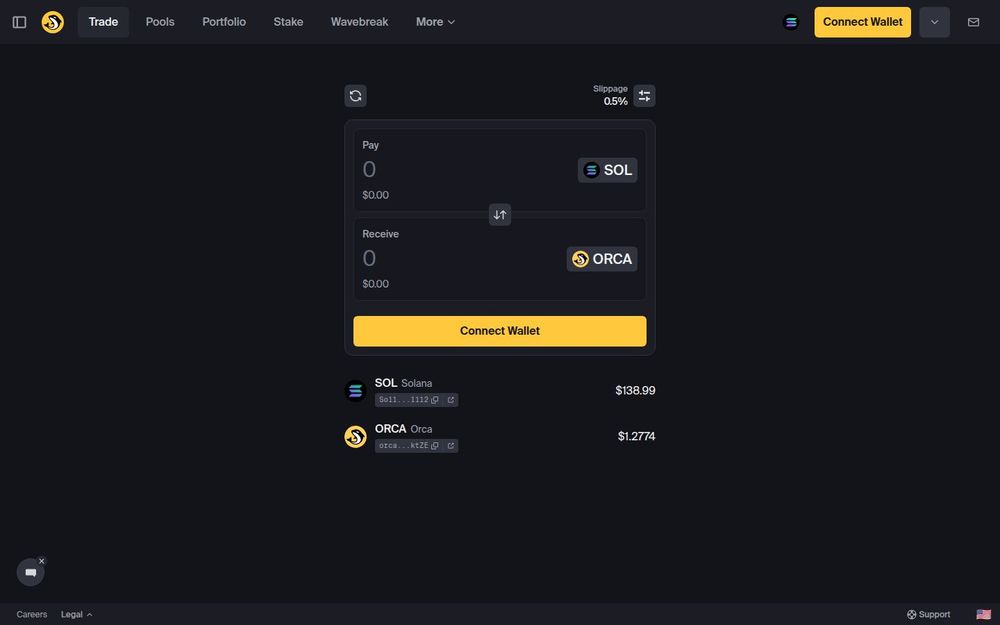
Orca is a Solana-native decentralized exchange (DEX) and liquidity platform designed to make token swaps, liquidity provisioning, and yield strategies approachable and efficient. The front end exposes core actions like Connect Wallet, Swap/Trade, Pools, Portfolio, and Stake, along with a token directory (Wavebreak). Orca focuses on a smooth user experience, low-latency transactions, and leveraging Solana’s high throughput to minimize costs and delays for traders and liquidity providers.
Core Capabilities
-
Swaps / Trade: A straightforward interface to exchange tokens on Solana. Users can set slippage tolerance and view quoted amounts for instant swaps between popular tokens such as SOL and ORCA.
-
Pools (Liquidity Provision): Create or join liquidity pools to earn trading fees. Liquidity providers deposit token pairs and earn a share of swap fees, enabling passive income for holders who want to contribute to AMM depth.
-
Portfolio Tracking: A dashboard to view token holdings and pooled positions in one place. This helps users keep track of their balances, impermanent loss exposure, and the value of pooled assets.
-
Staking: Options to stake certain tokens (including protocol token incentives) to earn rewards, aligning long-term participation and potential governance or protocol benefits.
-
Token Directory / Wavebreak: A curated token list and browsing experience that helps users discover listed tokens and their data, improving discovery and transparency across the Solana ecosystem.
How it Works
Orca integrates with Solana wallets via a wallet connection flow. Once a wallet is connected, the DEX reads balances and allows transactions directly from the user’s wallet. Swaps are executed through automated market maker (AMM) pools — users trade against on-chain liquidity maintained by pooled token pairs. Providers deposit both sides of a pair into a pool and, in return, receive liquidity tokens representing their share of the pool.
The platform exposes common controls such as slippage tolerance, which helps manage the acceptable deviation between quoted and executed prices, and displays token icons and prices for clarity. Transaction costs and confirmation are driven by the Solana network, enabling fast confirmations and typically low fees compared to many alternative chains.
Security and Governance
Orca emphasizes non-custodial interactions: users retain control of funds via their connected wallet, and trades are executed on-chain. The presence of an ORCA token ties the user experience to protocol incentives and community governance potential. Orca provides links to legal, support, and careers pages, reflecting an organized project structure and channels for user assistance.
While using Orca, users should remain mindful of typical DEX risks such as smart contract vulnerabilities, impermanent loss when providing liquidity, and potential token listing risks. Best practices include verifying token contracts, limiting slippage if trading volatile assets, and using small test trades when interacting with new tokens.
Recommended Reasons to Use Orca
-
User-friendly interface: Clean, minimal design with fast access to trading, pooling, staking, and portfolio tools.
-
Solana-native performance: Low latency and minimal fees make frequent swaps and small-value transactions more practical.
-
Comprehensive tooling: Integrated features like Pool management, Portfolio tracking, and staking let users manage multiple aspects of DeFi activity from one site.
-
Token discovery and transparency: Wavebreak token listings and clear token price displays help users make informed decisions.
Overall, Orca is a practical choice for users who want a straightforward DEX on Solana with essential DeFi features bundled into a single, approachable interface. Whether for simple token swaps or providing liquidity and staking for rewards, Orca serves as a convenient entry point to Solana’s decentralized trading and yield ecosystem.


