


Overview
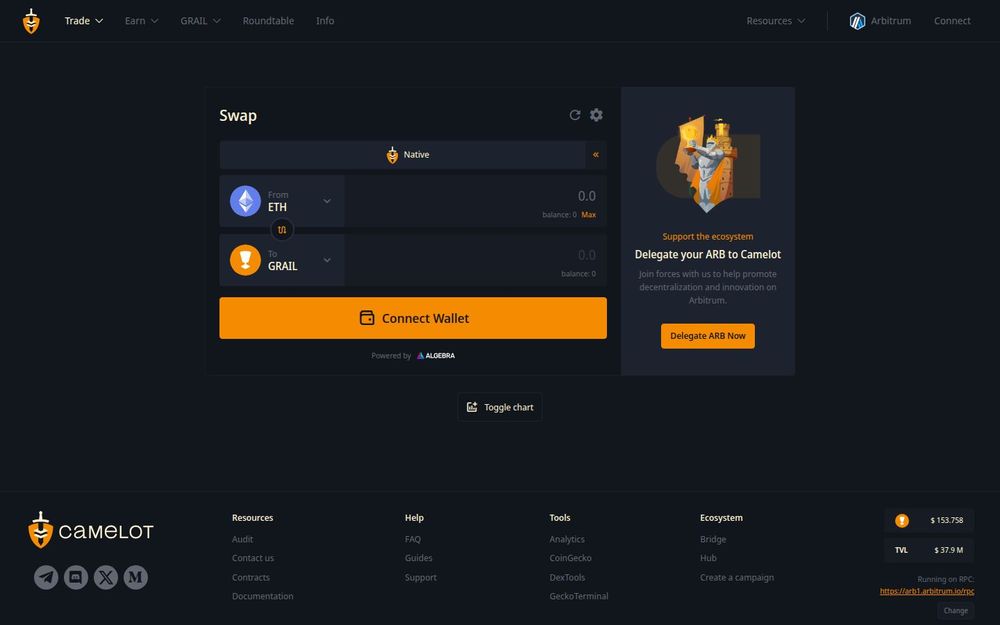
Camelot is an Arbitrum-native decentralized exchange (DEX) designed for efficient token swaps, liquidity provision, and community-driven governance. It offers a minimal, user-friendly swap interface that highlights native assets, token balances, and simple controls like “Max” for quick transactions. Built with integrations into the wider Arbitrum ecosystem, Camelot positions itself as both a trading venue and a hub for protocol participation, encouraging users to delegate ARB to strengthen decentralization and governance.
Core Capabilities
-
Fast, Low-Cost Swaps: Camelot enables native swaps on Arbitrum, prioritizing low latency and reduced transaction fees compared to mainnet operations.
-
Wallet Connectivity: The platform supports standard wallet connections for seamless transaction signing and balance display, making it easy to move from exploration to execution.
-
Liquidity Tools and Charts: Built-in toggles for charts and liquidity views help traders analyze market conditions before executing swaps.
-
Ecosystem Integrations: Camelot integrates with external DeFi tooling (for example, references to Algebra) and on-chain governance tooling like Tally to facilitate delegation and participation.
-
Community Governance and Delegation: Users are encouraged to delegate ARB tokens to Camelot’s governance identity to help drive protocol decisions and support decentralization on Arbitrum.
Main Features
-
Swap Interface: A straightforward swapping dashboard that supports native tokens and shows token icons, balances, and quick action buttons such as Max for convenience. The interface emphasizes clarity with from/to fields and a native asset selector.
-
Wallet Integration: Easy wallet connection enables users to view balances, approve tokens, and execute swaps. Integration with popular wallet providers ensures a familiar experience and secure signing flows.
-
Liquidity & Charting Tools: Toggleable charts and liquidity views provide visual context for trading decisions, letting users inspect price history and liquidity depth before placing a trade.
-
Ecosystem Partnerships: Supported by integrations with DeFi tooling such as Algebra, Camelot leverages external protocols and tooling to enhance its AMM capabilities and on-chain functionality.
-
Governance Participation: The platform encourages delegating ARB tokens to Camelot via on-chain governance interfaces (e.g., Tally). This fosters community engagement and aligns token holders with the protocol’s roadmap.
Why Choose Camelot
Camelot is recommended for users who want a simple, Arbitrum-native trading experience combined with opportunities for governance participation. Its user interface strips away unnecessary complexity while exposing the essential controls traders need—token selection, balance visibility, quick max inputs, and chart toggles. The DEX also places emphasis on community and ecosystem engagement, presenting clear pathways to delegate ARB and support decentralization initiatives.
Security and Best Practices
While Camelot offers convenience and integration, users should follow standard DeFi security practices: connect wallets only when necessary, verify contract addresses, ensure slippage tolerance is set appropriately, and review transaction details before confirming. Engaging with governance (delegation) should be done with an understanding of the on-chain implications and the governance process.
Getting Started
- Connect a compatible wallet to the Camelot interface.
- Select the token pair you want to swap, view balances and optionally open the chart for context.
- Use the Max button or enter a custom amount, review estimated prices and slippage, and confirm the swap.
- To support decentralization, follow the delegated governance link to delegate ARB tokens via a governance tool like Tally.
Conclusion
Camelot brings a focused, Arbitrum-first DEX experience to traders and liquidity providers. By combining a clear swap interface, wallet connectivity, charting tools, and community governance features, it aims to be both a practical trading platform and a rallying point for Arbitrum ecosystem participation.


