Overview
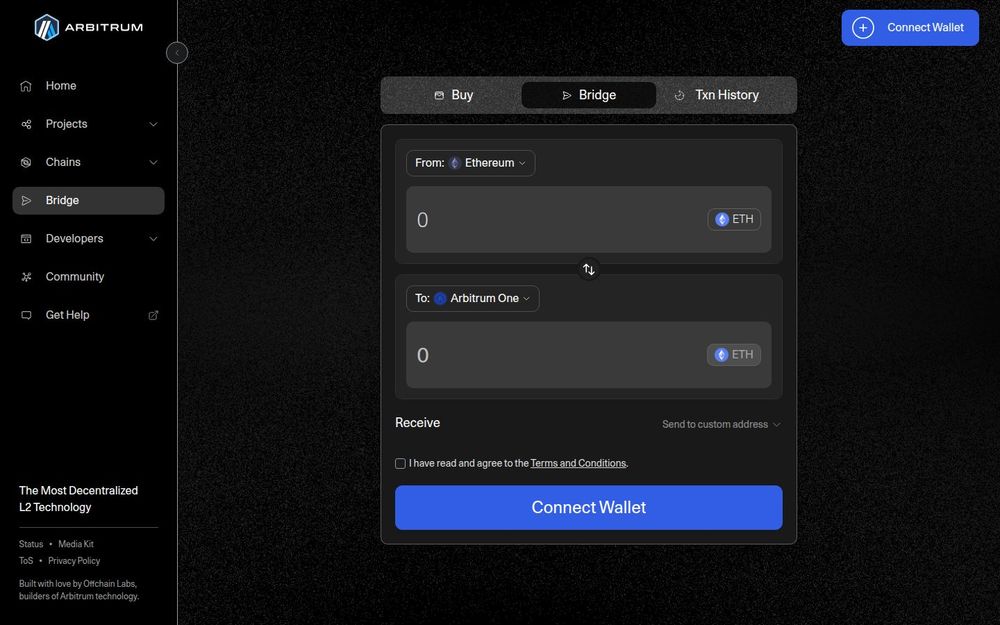
Arbitrum Bridge is a web-based interface that enables users to move assets from Ethereum to Arbitrum One, a Layer-2 scaling environment developed by Offchain Labs. The portal is part of the Arbitrum ecosystem and positions itself under the banner of “The Most Decentralized L2 Technology.” It provides core utilities for onboarding funds, reviewing transaction history, and interacting with the broader Arbitrum network and resources. The site links to developer documentation, chain statistics, project categories, and community support, making it an entry point for both end users and builders.
Core Capabilities
-
Wallet Connectivity: Connect a compatible crypto wallet to initiate deposits and view balances on Arbitrum One.
-
Cross-Chain Transfers: Move ETH and supported tokens from the Ethereum mainnet into Arbitrum One through the Bridge interface.
-
Transaction History & Monitoring: Access a transaction history view to track deposits and withdrawals and consult network Status pages for current operational health.
-
On-Ramps & Buy Options: A built-in Buy function helps users obtain ETH or other on-ramp services prior to bridging, simplifying first-time onboarding.
-
Custom Address Support: Send bridged assets to a custom address on Arbitrum One, with explicit user confirmation required (e.g., “I have read and agree to the Terms and Conditions”).
Key Features (numbered)
-
Secure Wallet Connection: The Bridge prompts users to connect a wallet securely, ensuring operations like deposits occur only after wallet authorization.
-
Simple Deposit Flow: A streamlined flow to transfer ETH from Ethereum to Arbitrum One, including options to specify destination addresses and view the token type being bridged.
-
Transaction Tracking: An integrated transaction history tab and links to a Status page allow users to monitor the progress and health of the bridge operations.
-
Ecosystem Integration: Direct links to Arbitrum ecosystem pages — Projects, Chains, Developers, Learn, and Community — help users discover tools, dapps, and developer resources.
-
User Controls & Legal Acceptance: The interface requires acceptance of Terms and Conditions and provides links to Privacy Policy and other legal resources, making user consent explicit.
Security, Trust & Transparency
Arbitrum Bridge is presented as part of Arbitrum’s decentralized Layer-2 ecosystem and prominently references Offchain Labs as the technology’s builders. The portal points users to operational status and media/brand kit resources, allowing for transparency about uptime and brand governance. The presence of transaction history, status pages, and developer documentation supports user verification and monitoring of cross-chain activity. Users should always ensure they are interacting with the official bridge domain, review terms, and confirm destination addresses before sending funds.
Why Use the Arbitrum Bridge?
-
It provides a straightforward way to move assets to Arbitrum One, enabling faster and cheaper transactions compared with mainnet Ethereum for many use cases.
-
Built-in links to ecosystem tooling and developer docs make it useful both for end users and builders exploring Arbitrum projects and infrastructure.
-
The Bridge consolidates essential on-ramp and monitoring features (Buy, transaction history, status) in one portal, reducing friction for onboarding and troubleshooting.
Getting Started
- Visit the official bridge portal and confirm you are on the correct domain (bridge.arbitrum.io).
- Connect your wallet and review balances on Ethereum.
- Choose the asset and destination (Arbitrum One or a custom address), accept the Terms and Conditions, and initiate the deposit.
- Monitor the transaction via the Bridge’s history tab and the Arbitrum status page.
Conclusion
Arbitrum Bridge functions as the practical on-ramp between Ethereum and Arbitrum One, combining wallet connectivity, a streamlined deposit flow, transaction monitoring, and ecosystem navigation. As an entry point to the Arbitrum ecosystem, it balances usability and transparency while directing users toward additional developer and community resources.