


Overview
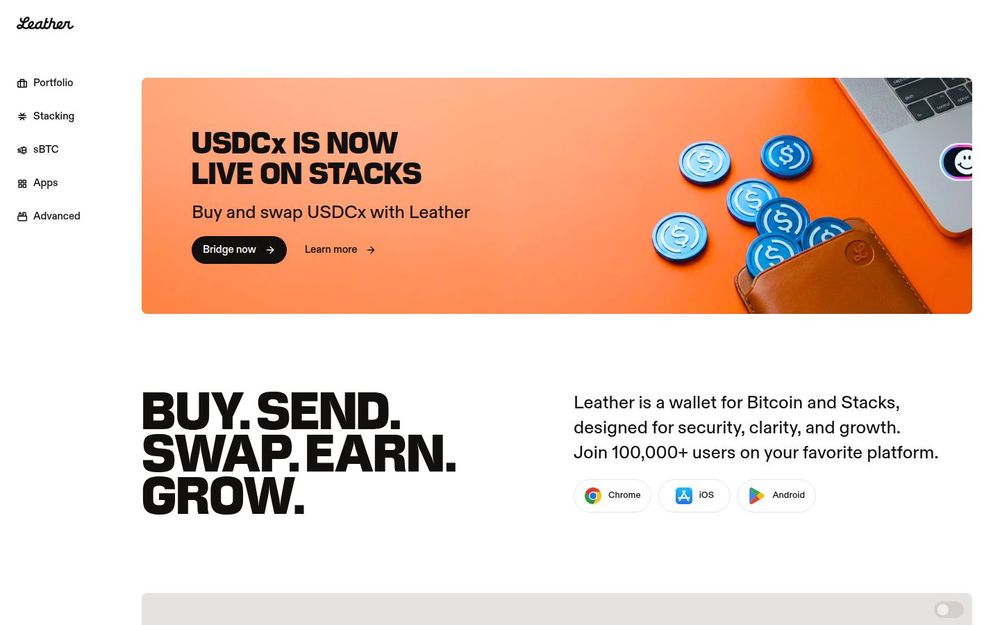
Leather is a self-custody wallet designed for Bitcoin and Stacks that balances security, usability, and growth. It offers a consistent, organized experience across desktop and mobile platforms, enabling users to manage multiple wallets, receive timely notifications, and access decentralized financial products such as swaps, sBTC earning, and stacking. Leather positions itself as a transparent, community-driven product that is open source, audited by reputable security firms, and continuously vetted through bug bounty programs.
Core capabilities
-
Multi-platform wallet management: Leather supports a Chrome extension as well as native iOS and Android apps, allowing users to create or restore wallets and keep Bitcoin and Stacks accounts in a single place.
-
Decentralized swaps: Users can swap over 100 tokens instantly and privately through integrated partners (Bitflow, Velar, ALEX, and others) without middlemen or accounts, maintaining custody of their keys.
-
Earning and yield products: Leather aggregates yield opportunities like sBTC rewards and stacking options (pooled and liquid stacking) with transparent historical yields from multiple providers.
-
Hardware wallet integration: Robust Ledger support with smart signing provides a safer hardware experience, enabling seamless multi-chain BTC & STX transactions and a smooth connect-once sign-smooth workflow.
-
Security and UX protections: Features such as UTXO protection, spam token filtering, transaction review steps, and real-time BTC notifications help prevent common user mistakes and protect collectibles (including Ordinal Inscriptions).
Why choose Leather
Leather is built for users who want direct control over their assets while accessing convenient onramps, swaps, and yield strategies. The wallet combines the practicality of an organized, nameable multi-account interface with advanced protections found in professional custody products. Leather’s emphasis on transparent integrations and provider aggregation means users can compare yields and providers in one place, making it easier to make informed choices about where to move assets.
Leather also invests in trust: the project is open source, has undergone audits (Least Authority), and runs a public HackerOne program to rapidly surface and remediate vulnerabilities. That combination of community visibility and formal review adds meaningful assurance for users managing high-value assets.
Getting started
- Install the Leather extension (Chrome) or download the iOS / Android app.
- Create a new wallet or restore an existing one using your seed phrase.
- Optionally connect a Ledger hardware device for smart signing and added security.
- Personalize wallet names and organize multiple accounts for clarity.
- Use the swap or bridge integrations to move assets, or explore sBTC and stacking pages to allocate funds into earning products.
Security & trust
Leather emphasizes a “safety by design” approach. Key elements include:
- Open source codebase for community inspection.
- External security audit by Least Authority.
- Ongoing HackerOne vulnerability disclosure program.
- Transaction review prompts, spam filtering, and UTXO safeguards to reduce user risk.
These measures help reduce systemic risk while empowering users to remain in control of their private keys.
Supported platforms & integrations
Leather is available as a Chrome extension and native mobile apps for iOS and Android. It integrates with bridges and onramps (e.g., Stacks bridge), decentralized swap providers, and multiple yield providers for sBTC and stacking services. Ledger hardware wallets are supported for advanced signing workflows.
Conclusion
Leather is a feature-rich self-custody wallet tailored for Bitcoin and Stacks users who want a secure, transparent, and growth-oriented experience. With multi-platform support, hardware wallet compatibility, decentralized swaps, and built-in earning opportunities, Leather aims to be a single hub for managing, growing, and protecting crypto assets while maintaining user control and transparency.

