


Overview
Wallet Guard is a browser-based security solution aimed at helping people interact with web3 safely. Launched as an open-source extension with companion tools like a MetaMask Snap and a security dashboard, Wallet Guard focuses on identifying scams, highlighting risky transaction details, and providing clear warnings before users approve wallet interactions. The product is positioned for a broad audience — from NFT collectors and DeFi traders to airdrop hunters and general web3 users — and emphasizes measurable impact, such as wallets protected and assets saved from scams.
Core Capabilities
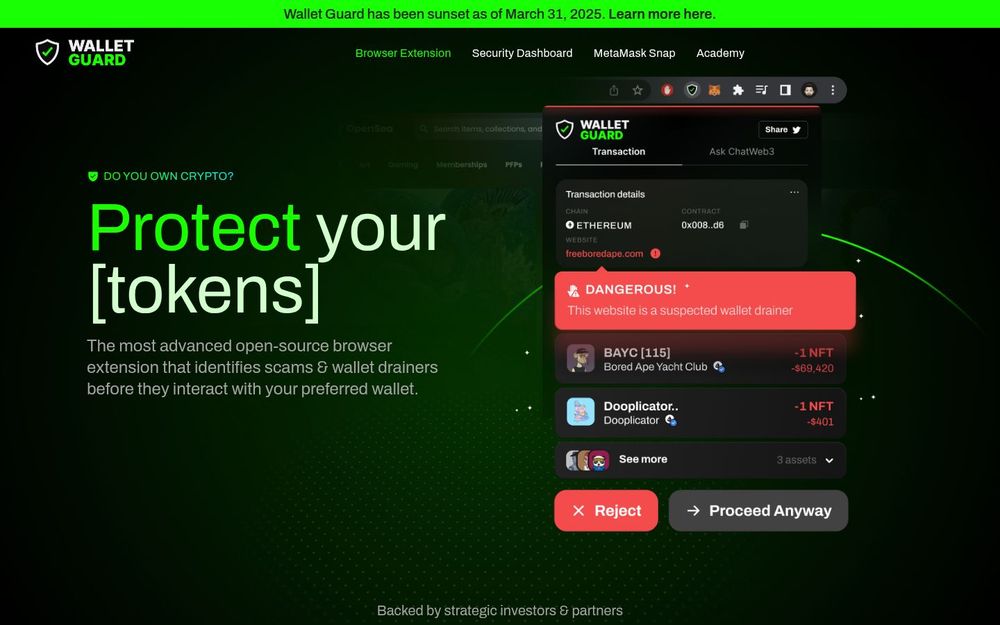
- Human-readable transactions: Converts opaque blockchain signatures and contract calls into understandable language so users can see what they are approving.
- Proactive scam detection: Identifies phishing sites and attempts to mimic legitimate services, warning users before interaction.
- Clear warnings & risk factors: Displays contextual alerts and risk scores during transaction flows to help users proceed with confidence.
- Transaction simulation & analysis: Simulates transactions to detect potential drain tactics and risky contract behaviors ahead of execution.
- Multi-chain support: Works across popular chains and networks to protect users in diverse web3 environments.
Key Features (numbered)
-
Human-readable transaction translation: Wallet Guard analyzes signatures and contract calls and presents them in plain language to reduce confusion and accidental approvals.
-
Real-time scam detection and site verification: The extension flags suspicious domains and phishing attempts by analyzing web content and known malicious patterns.
-
Visual warnings and risk summaries: When a transaction appears risky, Wallet Guard surfaces clear visual cues and risk factors so users understand potential consequences.
-
Transaction simulation engine: By simulating outcomes, Wallet Guard can identify potential wallet drainers and honeypot patterns before users commit assets.
-
Educational resources and community tools: The Wallet Guard Academy and blog provide ongoing guidance, threat recaps, and best practices for staying safe in web3.
How it works
Wallet Guard runs primarily as a browser extension and integrates with wallet providers (for example via MetaMask Snap) to observe pending transactions and web interactions. It does not act as a custodian wallet; instead, it analyzes data, simulates outcomes, and surfaces readable summaries and warnings. Users receive alerts when a site or transaction shows signs of phishing, impersonation, or an exploit-like behavior. Combined with simulation results and risk heuristics, these signals help users decide whether to proceed, cancel, or investigate further.
Use cases and target audience
Wallet Guard is useful for:
- NFT collectors who want to ensure minting or claiming flows are legitimate and free from malicious contracts.
- DeFi traders seeking to detect honeypots, rug pulls, or tokens with hidden transfer logic.
- Airdrop hunters who want to verify the authenticity of drops and confirm whether claims are safe to execute.
- Community moderators and DAOs that want an extra layer of protection for members interacting with on-chain opportunities.
Why choose Wallet Guard
Wallet Guard combines proactive detection, readable transaction explanations, and educational content to reduce user error and exposure to common web3 scams. The product emphasizes transparency (open-source), measurable impact (reported wallets protected and assets saved), and cross-chain support. For users who want a lightweight, in-browser safety layer that augments their existing wallet, Wallet Guard offers visible, contextual guidance at the moment of decision.
Getting started
Install the browser extension or enable the MetaMask Snap, review the onboarding guidance, and consult the Wallet Guard Academy for current threat reports. Because the product is designed to complement — not replace — your wallet, maintain standard security hygiene: keep private keys offline, verify domains manually, and use Wallet Guard’s warnings as an additional decision aid.
Conclusion
As web3 activity grows, tools that translate complex on-chain actions into human-readable signals and proactively flag malicious behavior become essential. Wallet Guard positions itself as a practical, user-friendly defense layer that helps people transact more safely by combining simulation, detection, and education into a single extension-based experience.


