


Overview
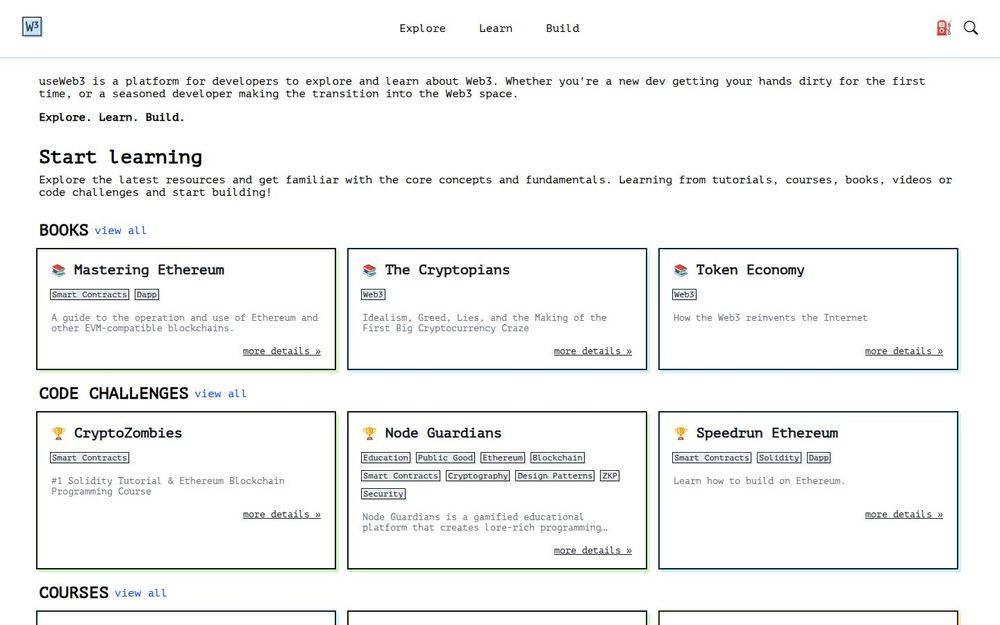
useWeb3 is a focused educational hub for developers interested in Web3 technologies and decentralized application development. The platform aggregates high-quality resources across multiple formats—books, tutorials, videos, courses, starter kits, and code challenges—so learners can discover both conceptual explanations and hands-on projects. It targets a wide spectrum of users: those new to blockchain who want foundational knowledge, intermediate engineers looking to build dApps and smart contracts, and experienced developers seeking advanced topics like zero-knowledge proofs and security best practices.
Core capabilities
useWeb3 organizes its offerings into clear, browsable categories and highlights vetted resources. Key capabilities include:
-
Curated Resource Collections: A centralized catalog of books, guides, and videos such as "Mastering Ethereum" and curated playlists that give users easy access to authoritative content.
-
Hands-on Code Challenges: Interactive learning through platforms like CryptoZombies, Speedrun Ethereum, and Node Guardians to practice Solidity, smart contracts, and blockchain programming in a gamified or exercise-driven way.
-
Structured Courses and Tutorials: Recommendations for full courses and step-by-step tutorials that cover full-stack Web3 development with tools like Ethers.js, Hardhat, and frontend integration patterns.
-
Starter Kits and Boilerplates: Links to repositories and starter templates—such as Create Eth App and scaffold-eth—that accelerate project setup and help developers ship dApps quickly.
-
Reference Guides and Best Practices: Security and design resources, including smart contract best practice guides and glossaries that help developers avoid common pitfalls and adhere to secure development patterns.
Feature details
-
Comprehensive Categorization: Resources are tagged (e.g., Smart Contracts, Dapp, ZKP, Security) so developers can filter by topic and skill level.
-
Learning Path Flexibility: Supports multiple learning styles—reading books, watching video courses, doing tutorials, or jumping into interactive challenges—so users can combine approaches that suit their progress.
-
Practical On-Ramping: Starter kits and boilerplates provide immediate, runnable codebases for building and experimenting, lowering the barrier to creating functional dApps.
-
Community and Newsletter: A Substack newsletter and links to community-maintained roadmaps help developers stay updated with trends, new tooling, and curated content.
-
Real-World Focus: Resources emphasize real-world tooling, deployment considerations (gas, L2s), DeFi concepts, and secure contract patterns rather than purely theoretical material.
Why choose useWeb3
useWeb3 is ideal for developers who want a single, organized gateway into Web3 learning. The site saves time by curating proven books, videos, and tutorials, and it points directly to hands-on experiences through challenges and starter kits. By combining conceptual resources with executable templates and exercises, useWeb3 encourages learning by doing, which is crucial for mastering blockchain development. It also covers advanced topics like cryptography and ZKPs alongside foundational subjects like Solidity and full-stack dApp engineering, making it useful across stages of a developer’s career.
Recommended approach for learners
Start with foundational readings and curated tutorials to understand blockchain concepts and Ethereum mechanics. Follow up with interactive challenges (e.g., CryptoZombies) to internalize Solidity basics, then leverage starter kits to build a small dApp. Use guides and best-practice references to audit your contracts and improve security, and subscribe to the newsletter to discover new tools and community opportunities.
Conclusion
useWeb3 acts as a practical, well-organized portal into the Web3 ecosystem, combining curated theory with hands-on practice. Its diverse content types, clear tagging, and emphasis on real-world tooling make it a strong resource for developers transitioning to or deepening their expertise in decentralized application development.


