


Overview
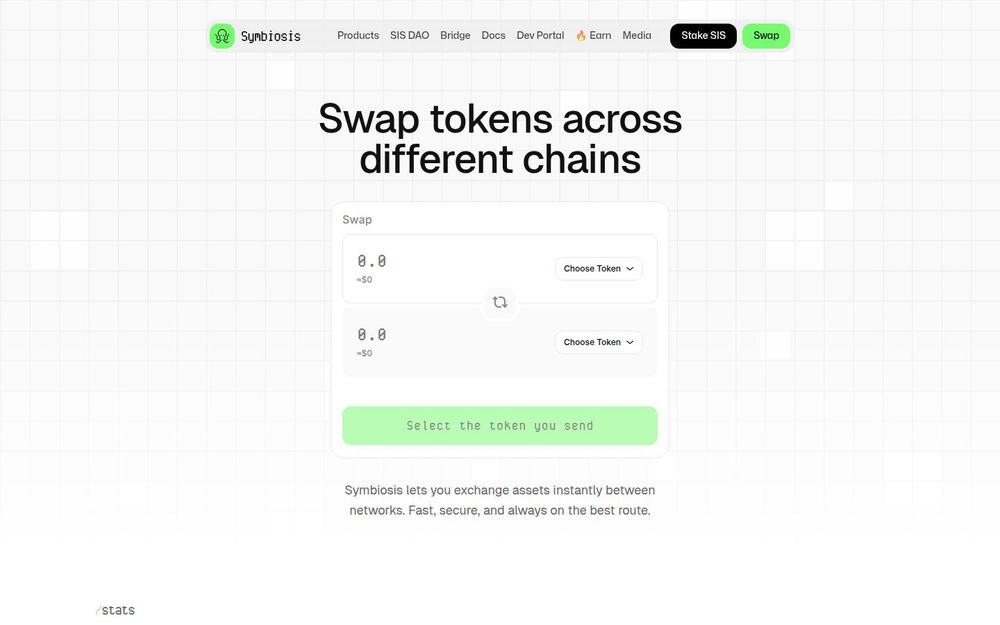
Symbiosis is a cross-chain AMM DEX designed to make token mobility seamless across multiple blockchain ecosystems. It aggregates liquidity from both L1s and L2s, EVM and non-EVM networks, and routes swaps across chains in a single flow. The protocol is built to handle high throughput and large volumes while minimizing user steps: no centralized custody, no KYC for swaps, and an emphasis on secure cross-chain routing. Symbiosis also supports a broader DeFi stack—staking, liquidity provisioning, zaps, farming, and DAO governance—plus developer-facing tools for integration.
Core capabilities
-
Cross-chain swaps: Instantly exchange tokens between different blockchains using Symbiosis’ multi-DEX routing and cross-chain bridging flow. The system scans dozens of networks to find the best route for each trade.
-
Liquidity pools (Octopools / multi-coin pools): Provide capital-efficient, multi-asset pools that aim to reduce impermanent loss and enable zero volatility loss strategies for cross-chain liquidity provisioning.
-
Staking and SIS governance: Stake SIS tokens to support relayer/validator infrastructure, earn rewards as a delegator, and gain governance power through the SIS DAO for protocol-wide decision-making.
-
Zaps & cross-chain liquidity movement: Deposit or move liquidity across chains into third-party DeFi protocols in a single transaction using cross-chain zaps, simplifying multi-step liquidity management.
-
Developer tooling (API & SDK): Expose Symbiosis functionality via a public API and a JavaScript SDK to enable third-party apps, wallets, and services to offer decentralized cross-chain swaps and liquidity features natively.
Security, audits, and incentives
Symbiosis emphasizes security through completed third-party audits and a public bug bounty program. The protocol maintains an active GitHub repository for transparency and encourages ethical hacking via bounty rewards. These measures, combined with on-chain explorer tooling and public documentation, help reduce operational risk and build trust with integrators and end users.
Metrics and network coverage
Symbiosis highlights operational scale: multiple years on the market, 45+ integrated networks, millions of transactions processed, and billions in total swap volume. These metrics reflect the protocol’s capacity to handle cross-chain traffic and signal liquidity depth and routing maturity, which are critical for large or complex swaps.
Developer and integration features
The platform provides a robust set of developer resources: REST and RPC-style API endpoints, a JavaScript SDK for client integration, developer documentation, and a dev portal. This makes it straightforward to embed cross-chain swap functionality into wallets, dApps, or backend services while leveraging Symbiosis’ routing and liquidity aggregation.
Use cases and target users
- Traders and holders who need to move assets across chains without using centralized exchanges.
- Liquidity providers seeking efficient, multi-coin pools and cross-chain yield opportunities.
- dApp and wallet developers who want to integrate cross-chain swap and liquidity primitives via API/SDK.
- Protocol teams requiring cross-chain gateway features for onboarding liquidity or enabling multi-chain functionality.
Why choose Symbiosis
Symbiosis stands out because it combines broad network coverage, developer-friendly integrations, and a full suite of DeFi primitives (swap, staking, pools, zaps, DAO) under a security-conscious framework. Its focus on routing efficiency, single-flow cross-chain swaps, and automated liquidity aggregation reduces friction for users and integrators alike.
Getting started
Users can access the Symbiosis swap UI, stake SIS via the staking portal, provide liquidity to pools, or explore the SDK and API to embed functionality. The documentation and dev portal contain guides, and the project links to security audits and a bug bounty program for responsible reporting.
Conclusion
Symbiosis is a comprehensive cross-chain DeFi infrastructure layer that aims to simplify token mobility and liquidity orchestration across diverse blockchain networks. With multi-chain routing, liquidity-efficient pools, staking, governance, and developer tools, it is positioned to support both end users and integrators seeking reliable, secure cross-chain capabilities.


