


Overview
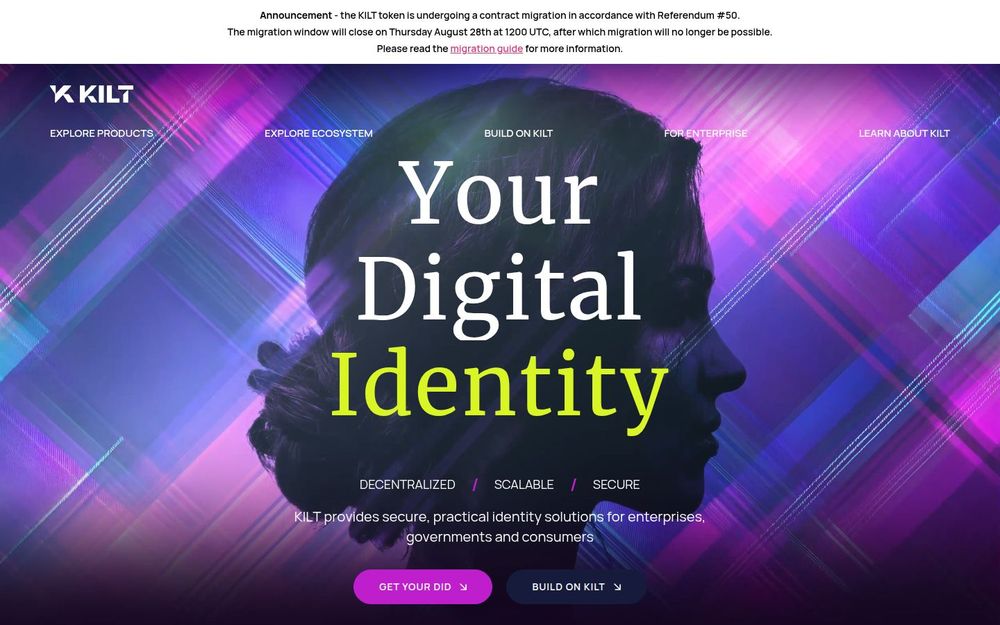
KILT is a decentralized identity protocol designed to return control of personal and organizational credentials to their owners. It provides tools and standards to issue, hold, and verify verifiable credentials anchored to decentralized identifiers (DIDs). With a privacy-first mindset and integration into the Polkadot ecosystem, KILT focuses on real-world applicability across industries by enabling secure, reusable credentials and verifiable claims without exposing unnecessary personal data.
Core Capabilities
-
Self-Sovereign Identity (DIDs): KILT allows users to create and manage decentralized identifiers that represent ownership of identity data. These DIDs are anchored on blockchain infrastructure to support immutable auditability and trust.
-
Verifiable Credentials: The protocol supports the issuance and verification of verifiable credentials that can be selectively disclosed, enabling minimal data sharing and preserving user privacy during interactions such as KYC, logins, or permissioned access.
-
Sporran Wallet & UX Tools: The Sporran browser wallet acts as a gateway for users to manage credentials and DIDs, sign transactions, and interact with Web3 services. This lowers friction for onboarding and everyday use.
-
Specialized Apps (web3name, DIDSign, SocialKYC): KILT’s ecosystem includes web3name for human-readable identity handles, DIDSign for one-click file verification, and SocialKYC for streamlined credential issuance tied to social proof and attestations.
-
Cross-Chain & Enterprise Integration: KILT is designed to work with Polkadot and to bridge to other chains like Ethereum and Base, offering tools for enterprises to integrate decentralized identity into existing Web2 workflows while meeting privacy and regulatory needs.
Use Cases and Industry Applications
KILT is positioned for a broad range of applications where verified identity and privacy matter. Common use cases include:
-
KYC/KYB: Reusable, privacy-preserving credentials simplify identity verification for finance and regulatory compliance.
-
Gaming: Players can control in-game identities and assets via verifiable credentials, enabling cross-game portability and secure ownership.
-
DePIN and IoT: Verified user and machine identities help secure physical infrastructure networks and support trusted interactions between devices and services.
-
Real-World Assets (RWA): KILT provides identity and provenance layers for tokenized assets, bridging TradFi and DeFi with trusted ownership records.
-
AI Data Provenance: By authenticating contributors and datasets, KILT helps establish verified provenance for training data, supporting ethical and auditable AI practices.
Enterprise & Ecosystem
KILT targets enterprises that need privacy-first identity solutions without rebuilding core systems. It offers open-source tooling, fiat payment options for credential issuance, and partnerships in regulated sectors. Security and sustainability are enhanced by its Polkadot integration, and community governance supports long-term development. The protocol also highlights practical integrations like machine identity pilots and upcoming KYC offerings.
Developer Experience
Developers can build on KILT using SDKs and APIs for credential issuance, verification, and DID management. The platform emphasizes modularity and interoperability so projects can integrate identity flows into Web2 systems or fully decentralized dApps. Cross-chain bridges and token infrastructure (e.g., Polar Path bridging) expand deployment options across multiple blockchains.
Why Choose KILT
KILT is ideal for projects and organizations that need privacy-preserving, reusable identity infrastructure with clear developer support and enterprise readiness. Its combination of user-controlled DIDs, verifiable credential tooling, wallet UX, and multi-chain availability makes it a practical choice for real-world adoption where trust, compliance, and data minimization are essential.


