


Overview
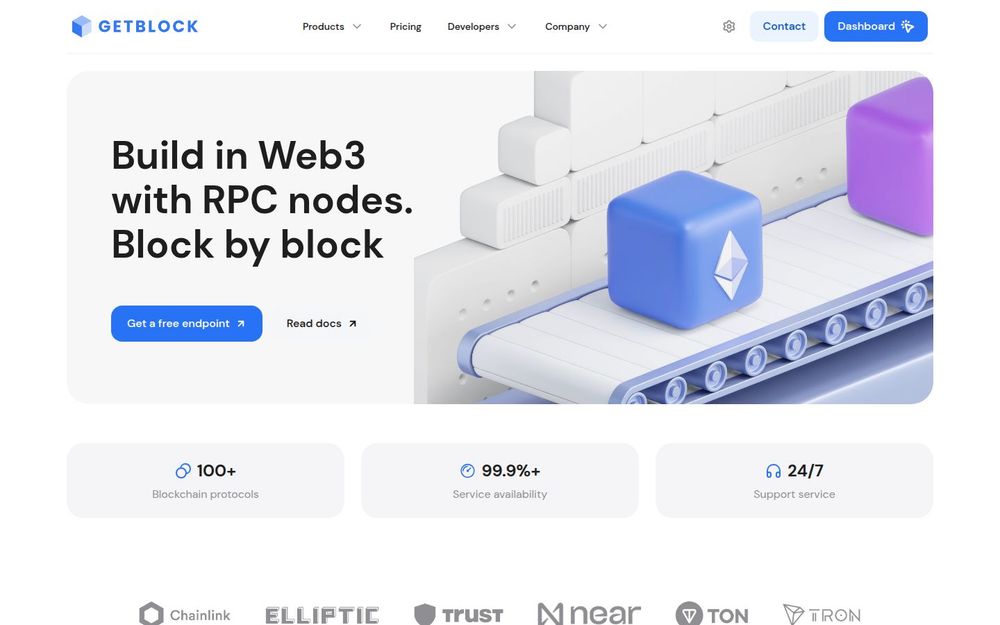
GetBlock is a Web3 RPC provider designed to simplify and scale access to blockchain networks for developers, teams, and enterprises. It provides instant endpoints to a broad range of networks — from major Layer 1 blockchains like Ethereum and Solana to Layer 2s, testnets and niche chains — through unified APIs. The service is built to balance cost-effectiveness, performance, and reliability, and it supports both shared multi-chain endpoints and dedicated nodes deployed on private servers for higher throughput and isolation.
Core Capabilities
-
Multi-chain coverage: Access to 100+ blockchain protocols including mainnets and testnets. This broad coverage reduces integration friction for multi-chain dApps.
-
Multiple API interfaces: Support for JSON-RPC, REST, WebSocket and GraphQL makes it easy to integrate with various client libraries and tooling.
-
Dedicated and shared nodes: Options range from free/shared endpoints for development to fully customized dedicated nodes hosted on private servers for production workloads.
-
Monitoring & analytics: A user-friendly dashboard exposes usage statistics, request counts, methods used, and uptime metrics so teams can track performance and cost.
-
Tiered pricing and compute units: Flexible plans (Free, Starter, Advanced, Pro, Enterprise) allocate compute units (CUs), request-per-second (RPS) capacity, and access tokens to fit different project scales.
Main Features
-
Instant RPC Endpoints: Quickly obtain endpoints for dozens of networks to query balances, transactions, tokens, and contract data without running your own node.
-
Dedicated Node Deployments: Deploy highly performant, fully-customized RPC nodes on private servers for predictable performance, unlimited requests and archive data access.
-
Multi-protocol Support: Use JSON-RPC, REST, WebSocket or GraphQL depending on your integration needs; ideal for frontends, backends, indexers and analytics.
-
Advanced Monitoring & Statistics: Track API usage, error rates, method distribution and request volumes via a clear dashboard to optimize usage and debug issues.
-
Enterprise & Team Features: Team accounts, archive access, SLA options, advanced statistics and priority support for larger customers or mission-critical workloads.
Security, Reliability and Performance
GetBlock emphasizes high uptime (publicly reported near 99.9% for many chains) and low latency by providing geographically distributed infrastructure and private dedicated nodes. For security, dedicated node deployments allow isolation from multi-tenant environments, while access tokens and usage controls help protect endpoints. The availability of archive nodes and unlimited data on dedicated plans aids historical queries and forensic analysis.
Use Cases and Who Should Use It
- Developers building wallets and multi-chain dApps who need unified RPC access across networks.
- NFT marketplaces and analytics platforms that require complete collection metadata, holder histories and token transfers.
- DeFi projects and trading systems requiring reliable, low-latency access for on-chain price feeds and contract interactions.
- DAOs, indexers and monitoring systems that demand consistent real-time data and high request throughput.
Pricing & Getting Started
GetBlock offers a free tier suitable for experimentation and small projects, and several paid plans that scale by compute units, RPS, and access tokens. A Pro tier and customizable Enterprise plans are available for teams requiring 24/7 support, dedicated nodes, and advanced statistics. To begin, you can sign up for a free endpoint, consult the developer documentation, and evaluate the right plan based on expected request volume and retention needs.
Why Choose GetBlock
GetBlock is well suited for teams that need quick multi-chain connectivity without the overhead of maintaining dozens of node instances. Its combination of versatile API support, monitoring tools, and dedicated node options make it a practical choice for projects ranging from prototypes to enterprise-grade blockchain products. The service helps teams reduce infrastructure complexity while retaining options for performance tuning and enterprise-level features when required.


