


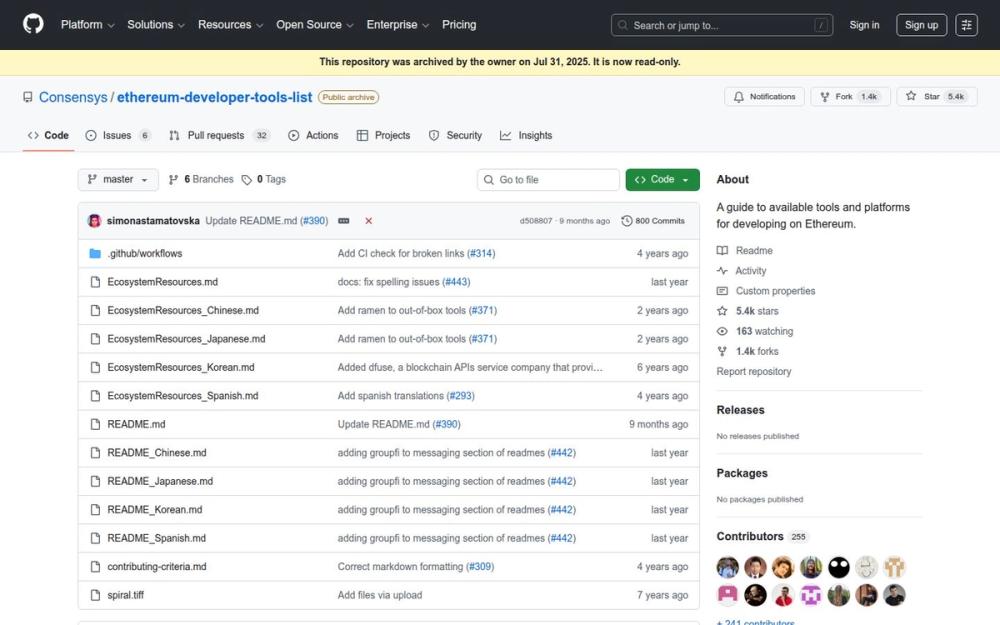
Overview
The Ethereum Developer Tools List is a curated directory produced and hosted by ConsenSys that aims to centralize the many tools, libraries, and services developers use to build on Ethereum. It functions as a developer-oriented catalog rather than a single product: you can find curated links and short descriptions for smart contract languages, development frameworks, IDEs, node providers, storage systems, testing suites, security scanners, monitoring platforms, and more. The repository is community-driven, accepts contributions through pull requests, and documents inclusion criteria to ensure entries are maintained and relevant.
Core Capabilities
-
Comprehensive Categorization: The list organizes the Ethereum ecosystem into clear categories — for example, smart contract languages, frameworks, IDEs, infrastructure, storage, monitoring, testing, and security. This hierarchical structure helps developers quickly navigate from a general need (testing, deployment, monitoring) to recommended projects and resources.
-
Developer Onboarding Guidance: The repository includes a "New developers start here" section that recommends practical starting points such as Solidity, MetaMask, Truffle, Hardhat, and Foundry. These curated recommendations help new entrants select sensible tools to begin building and testing smart contracts.
-
Links to Best Practices and Standards: Beyond tooling, the list links to key standards and educational materials, including widely adopted ERC specifications (ERC-20, ERC-721, etc.), security checklists, and patterns for upgradeability and architecture. This makes it a useful learning hub for safe and modern contract development.
-
Community Curation and Contribution Process: The repository is maintained by contributors and provides guidance on how to add or remove tools. It enforces inclusion criteria (projects must have a working product, actively maintained, and be appropriately vetted) which helps maintain quality and reduce noise.
-
Multilingual Resources and Ecosystem References: The project hosts translated READMEs and additional ecosystem resource pages (Chinese, Japanese, Korean, Spanish), plus an EcosystemResources file covering wallets, DApps, and educational resources to serve a global developer audience.
Notable Features and Sections
-
Smart Contract Languages & Frameworks: Entries include Solidity, Vyper, Yul, Foundry, Truffle, Hardhat, Brownie, and others with links to official docs and guides.
-
Infrastructure & Node Providers: The list points to clients and node providers (Geth, Besu, Infura, Alchemy, QuickNode, Chainstack) enabling choices for running or accessing Ethereum nodes.
-
Security & Testing Tools: A robust set of recommended tools includes MythX, Mythril, Slither, Manticore, coverage tools, linters, and monitoring solutions to help secure and validate contracts.
-
Patterns & Best Practices: Guidance on upgradeability, proxy patterns, the Diamond Standard, and common smart contract patterns promotes maintainable, auditable designs.
Why Use This List
-
It provides a single, well-organized entry point to the broad and fast-moving Ethereum tooling landscape.
-
The curated recommendations and contribution criteria elevate quality and reduce the time developers spend vetting tools.
-
The repository is practical for discovery, onboarding, and reference — from learning basics and prototyping to selecting production-grade infrastructure and security tooling.
Limitations and Status
Be aware that the repository was archived on July 31, 2025 and is now read-only. While the content represents a valuable snapshot of tooling and community best practices, users should verify the current maintenance status and versions of linked projects before relying on them for production deployments.
Conclusion
The Ethereum Developer Tools List is a structured, community-maintained compilation designed to help developers discover, evaluate, and adopt the right tools for building on Ethereum. It combines practical onboarding, curated categories, and links to standards and best practices, making it a foundational reference for anyone working in the Ethereum ecosystem.

