


Overview
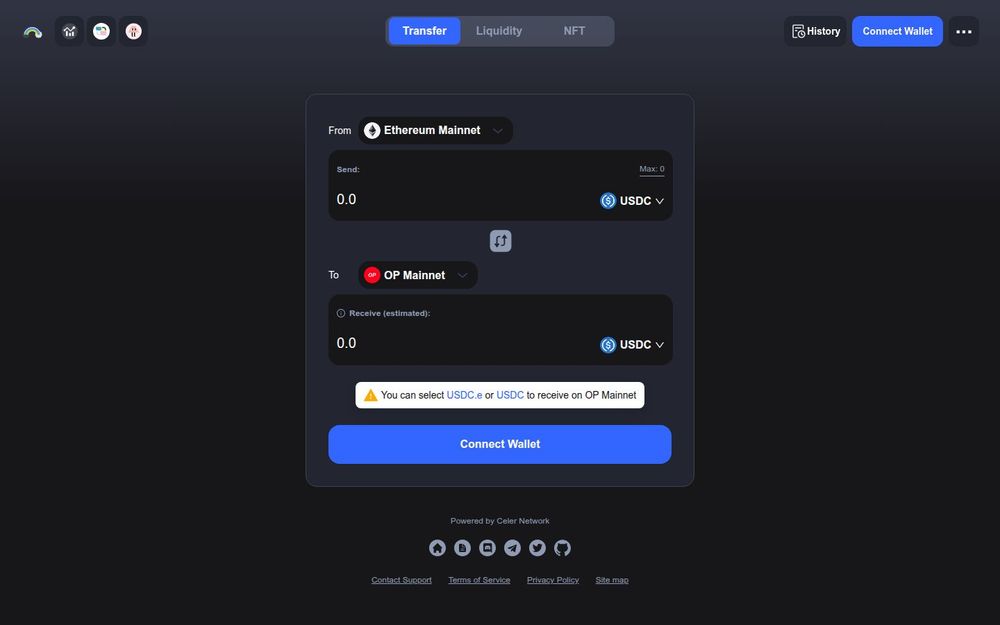
cBridge is Celer Network’s cross-chain bridging interface that focuses on making token and NFT transfers between blockchains and layer-2 networks straightforward, fast, and cost-efficient. The web UI exposes primary flows such as Transfer, Liquidity, and NFT bridging alongside supporting tools like Analytics, an Explorer, and Staking functionality. Users interact with the bridge by connecting a Web3 wallet, selecting a source chain and a destination chain, choosing a token (for example USDC), and initiating a cross-chain transfer with an estimated receive amount shown in the interface.
Core Capabilities
-
Cross-chain Token Transfers: cBridge supports moving tokens across multiple chains and L2s. The interface allows users to specify the From chain and the To chain, select the token (e.g., USDC or USDC.e), set an amount, and see an estimated receive amount before confirming the transaction.
-
Liquidity Provision & Management: Users can add liquidity to cBridge pools to facilitate faster transfers and earn fees or rewards. The platform exposes a Liquidity section where providers can deposit supported tokens and track their positions.
-
NFT Bridging: Beyond fungible tokens, cBridge includes mechanisms for bridging NFTs between supported chains, enabling cross-chain NFT mobility for marketplaces and collectors.
-
Analytics & Explorer: The site provides Analytics dashboards and an Explorer to inspect bridge activity, transfer histories, and performance metrics. These tools help users and liquidity providers verify activity, review transaction histories, and monitor throughput.
-
Staking & Incentives: cBridge integrates Staking features that allow participants to stake or delegate to support network operations and potentially earn incentives. This is part of the broader ecosystem tooling that aligns liquidity and protocol security.
How the User Experience Works
The user flow is intentionally simple and guided. After clicking Connect Wallet, users choose a source chain icon (for example Ethereum Mainnet) and then a destination chain (for example OP Mainnet). Token icons are shown alongside token names to reduce confusion. There are quick controls such as Max to fill the full balance and an estimated receive field that updates with expected outcomes. The UI also calls out token variants (e.g., USDC.e vs USDC) when different wrapped representations are available on the destination chain.
Security, Fees, and Performance
cBridge focuses on delivering reasonable transfer speeds and minimized costs by leveraging pooled liquidity and bridging mechanics that reduce on-chain gas where possible. Users should always confirm network and token variant selections to avoid receiving an unsupported asset on the destination chain. The platform exposes transaction history and on-chain details through the Explorer so users can independently verify settlement and transaction status.
Why Choose cBridge
-
Simplicity: A clear, step-by-step interface makes cross-chain transfers approachable for users of different experience levels.
-
Comprehensive Tooling: Integrated Analytics, Explorer, and History give transparency into performance and past operations.
-
Multi-Asset & Multi-Chain Support: Support for tokens, liquidity provisioning, and NFT bridging across a broad set of networks enables many cross-chain use cases, from simple token transfers to liquidity management.
Recommendations and Considerations
Before using the bridge, verify wallet connectivity and network selection, double-check token variants (wrapped vs native), and review estimated fees. For liquidity providers and stakers, evaluate reward structures and lockup periods. Use the Analytics and Explorer to monitor activity and confirm expected settlements. Overall, cBridge is useful for anyone who needs reliable cross-chain movement of tokens and NFTs with tools to manage liquidity and inspect protocol performance.


