


Overview
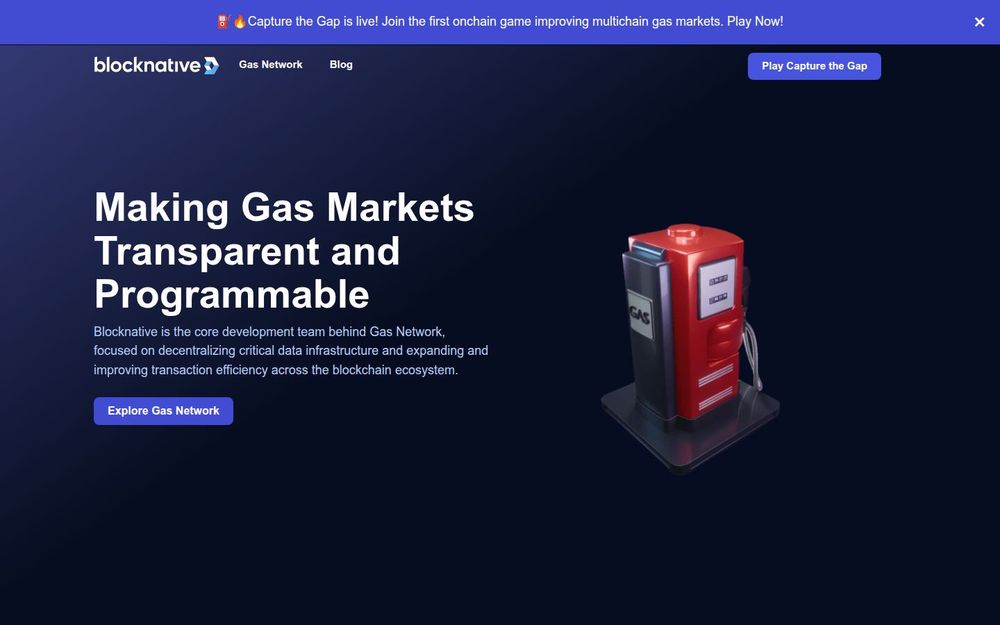
Blocknative is a purpose-built infrastructure provider for transaction and gas market data in the Web3 ecosystem. Founded to address the opacity and inefficiencies of blockchain transaction flows, Blocknative powers real-time visibility into the mempool, supplies predictive gas APIs, and builds tooling aimed at both developers and network operators. Its initiatives — notably the Gas Network — seek to decentralize access to critical transaction data and to improve fee predictability and transaction success rates across Layer 1 and Layer 2 networks.
Core Capabilities
-
Real-time Mempool Data: Blocknative offers continuous, low-latency access to mempool events, enabling applications to observe pending transactions, track replacements, and detect front-running or MEV patterns before transactions are mined.
-
Gas Prediction APIs: Their APIs provide dynamic fee estimates and probability-based predictions for transaction inclusion, which help wallets and dApps set competitive yet cost-efficient gas parameters.
-
L2 Decoding & Cross-chain Support: Blocknative supports decoding and interpreting Layer 2 transaction payloads and extends compatibility across multiple chains, helping teams maintain consistent UX and monitoring across ecosystems.
-
Wallet Integration & Onboarding Tools: The platform supplies integrations and tooling for wallet developers to improve transaction reliability, display clearer fee guidance to users, and reduce failed transactions caused by incorrect gas settings.
-
Research & Monitoring Tools: Blocknative publishes analysis on MEV, gas market behavior, and network events, and offers operational services for L1/L2 teams to optimize performance, troubleshooting, and fee mechanisms.
How It Works
Blocknative aggregates data from network nodes and relays to construct a real-time view of pending transactions and fee markets. Their systems analyze mempool dynamics and apply statistical models to produce actionable gas estimates and inclusion probabilities. Developers can access these outputs through REST and WebSocket APIs, enabling integration into wallet UIs, monitoring dashboards, and backend transaction managers. The Gas Network initiative expands this model to a decentralized marketplace for gas-related data, allowing experimentation with multichain gas mechanisms and on-chain gaming experiences focused on market behavior.
Use Cases and Beneficiaries
-
Wallet providers use Blocknative to improve UX by showing accurate fee ranges, avoiding failed transactions, and enabling user-friendly retry flows.
-
Exchanges and DeFi protocols leverage mempool feeds and prediction models to reduce slippage, improve order routing, and mitigate MEV risks.
-
Layer 1 and Layer 2 operators adopt Blocknative’s infrastructure to streamline diagnostics, improve block inclusion performance, and optimize network-level fee parameters.
-
Builders and researchers use published Blocknative Research to understand MEV dynamics, post-merge outcomes, and the economics of transaction distribution.
Why Choose Blocknative
Blocknative combines practical developer tooling with research-backed insights. Its core strengths are low-latency mempool visibility, robust predictive models for gas, and broad compatibility across L1s and L2s. This makes it a strong choice when your team needs reliable fee estimation, transaction monitoring, and actionable alerts to reduce failed transactions and unexpected costs. The company’s media and research presence — including partnerships and citations in industry outlets — further demonstrates credibility and domain expertise.
Getting Started & Integration
Integration typically involves obtaining API credentials, connecting via WebSocket for real-time mempool events, and wiring gas prediction endpoints into wallet or backend transaction flows. Blocknative provides documentation, SDKs, and examples to accelerate adoption and to surface best practices for handling network congestion, transaction replacement (nonce management), and user-facing fee guidance.
Conclusion
Blocknative addresses a core pain point in Web3: unpredictable and opaque gas markets. Through a blend of real-time data, prediction services, and ecosystem research, it helps teams improve transaction reliability, reduce user friction, and gain clearer visibility into mempool and fee dynamics. Whether you are building a wallet, operating an L2, or optimizing a DeFi protocol, Blocknative provides practical infrastructure and insights to make transaction flows more transparent and programmable.


