


Overview
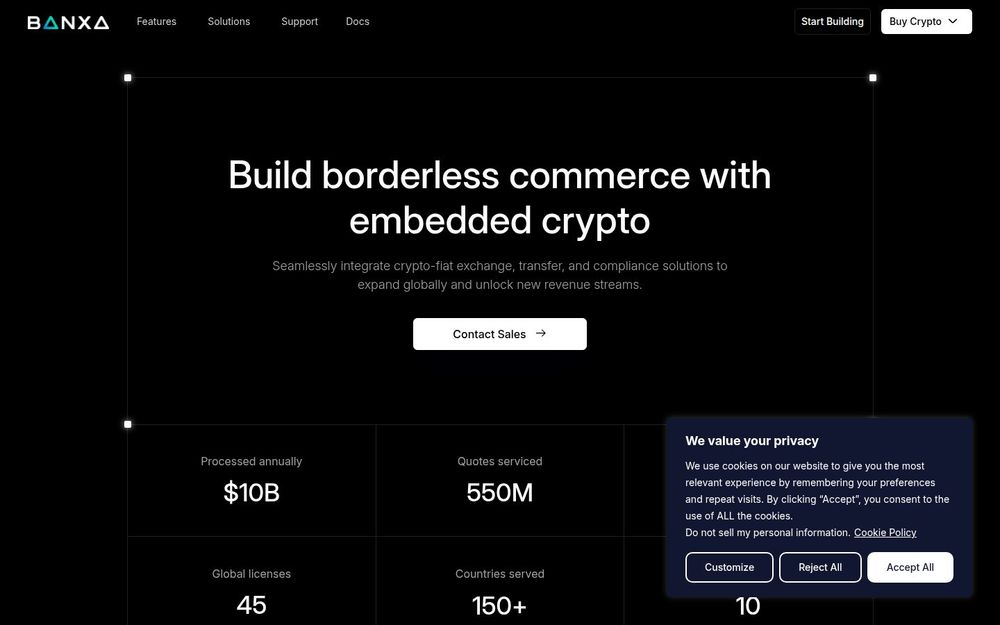
Banxa is a payments and compliance platform designed to bridge traditional finance and digital assets by providing seamless crypto‑fiat conversion and payments infrastructure. The platform targets exchanges, wallets, marketplaces, and fintechs that want to add fiat on‑ramps and off‑ramps, integrate secure wallets, or manage global fiat payment rails without building complex regulatory and banking relationships from scratch. Banxa positions itself as a modular, developer‑friendly partner with enterprise features, regulatory reach, and turn‑key integrations.
Key Features
-
Fiat and Crypto On/Off‑Ramp: Banxa enables businesses to accept fiat payments and convert them to cryptocurrencies (and vice versa) using a variety of payment methods, including card payments and local bank transfers.
-
Compliance & KYC/AML: Built‑in regulatory tooling handles identity verification, transaction monitoring, and compliance workflows to help partners meet jurisdictional requirements.
-
Developer APIs & SDKs: A comprehensive set of RESTful APIs and client SDKs (web, iOS, Android, React Native) make integration straightforward and programmable for developers.
-
Liquidity & Settlement: Access to liquidity and settlement capabilities reduces friction when moving between fiat and crypto, helping platforms provide competitive pricing and reliable execution.
-
White‑Label & Embedded Solutions: Customizable widgets and white‑label options allow partners to embed payment experiences directly into their products while maintaining brand control.
Core Capabilities
-
Payment Processing: Support for multiple fiat payment methods (cards, bank transfers, local rails) paired with crypto conversion functionality. This helps platforms accept funds globally and route them into crypto assets for end users.
-
Regulatory Coverage: Banxa maintains licenses and compliance processes across multiple regions. The platform provides KYC/AML checks, sanctions screening, and audit logs to support regulated operations.
-
Security & Fraud Prevention: Integrated fraud tools and partnerships with risk providers help spot suspicious activity and protect both businesses and end users.
-
Partner Network: Strategic integrations with wallets, exchanges, identity vendors, and payment processors expand capabilities and speed time‑to‑market for new offerings.
Integrations and Developer Tools
Banxa’s developer‑first approach includes clear API endpoints, example SDKs, and documentation for common flows like placing fiat buy orders, checking fiat/rates, and managing settlement. Developers can:
- Use the REST API to create and manage buy/sell orders programmatically.
- Integrate client‑side SDKs to expose seamless payment UIs and flows within web or mobile apps.
- Leverage webhooks and callbacks for real‑time order status updates and reconciliation.
The documentation and sample code enable rapid prototyping while production SDKs and libraries support enterprise scale deployments.
Security and Compliance
Banxa emphasizes regulatory compliance and operational security as core differentiators. The platform integrates KYC providers, transaction monitoring, and reporting pipelines to satisfy regional financial regulators. Security best practices—such as encrypted data at rest and in transit, secure API key handling, and scoped permissions—are part of the integration model. For businesses entering new markets, Banxa’s combination of licensing knowledge and compliance tooling helps reduce legal and operational risk.
Recommended Reasons
Banxa is well suited for businesses that want to add fiat‑to‑crypto or crypto‑to‑fiat capabilities quickly while outsourcing complex regulatory and banking relationships. Its modular architecture, developer resources, and partner network allow for incremental adoption (e.g., adding card payments first, then bank rails and wallet integrations). The platform’s emphasis on compliance, security, and scalability makes it a practical choice for exchanges, wallets, and fintechs that must meet regulatory requirements while delivering a smooth user experience. Additionally, white‑label options and SDKs let teams preserve brand continuity and accelerate launch timelines.
Getting Started
To begin integrating Banxa, review the public developer documentation, request API access, and discuss licensing or geographic coverage with sales. Typical onboarding includes API key issuance, sandbox testing, KYC flow configuration, and verification of supported payment rails for your target markets. With these steps complete, teams can embed on‑ramps, monitor transactions, and scale payment flows with a partner experienced in both crypto and fiat rails.


